
Contributors: Taylor Weston & Alex Velte
If you’re a leader in senior living, you’re used to solving urgent problems.
Someone calls in sick. A bed sits empty longer than expected. A family backs out at the last minute. A nurse gives their notice (or they don’t) and walks out of the building.
When those pressures stack up, it’s easy to default to tactics:
None of those are bad ideas. The issue is starting there.
In senior living, those tactics only work when the underlying strategy supports them.
Let’s walk through a few common scenarios, how operators commonly approach them, and how you can get real results (improved census and more hires) by approaching them differently than everyone else.
My wife used to work as an occupational therapist. One week, she told me that a CNA left for lunch and never came back (except for her last paycheck). That wasn’t unusual.
In this industry, staffing isn’t just numbers on a spreadsheet. When you’re short, everyone feels it. Overtime climbs. Morale dips. Standard of care drops.
When hiring feels urgent, the instinct is to turn on “help wanted” ads.
But if the process behind those ads is slow or unclear, you’re pouring water into a leaky bucket. You need good answers to questions like:
Communities that answer those questions first see different results. Their ads perform better because the system behind them works. Time-to-fill improves. Cost-per-hire drops. Agency reliance starts to shrink. Real employees show up to work.
The win isn’t “more applicants,” but rather fewer empty shifts and a more stable care team.
The strategy → develop hiring processes that make good use of your spend, get people in the door, and get residents the care they need

A few years ago, my wife and I were house hunting. We had a short list of non-negotiables that we looked for in online listings. If a house didn’t meet them, we weren’t scheduling a tour.
Families shop for care the same way now.
Before they ever call, they’re filtering online. They’re comparing. They’re asking AI tools questions. They’re scanning reviews. They’re trying to get a feel for a place without stepping inside.
If your website doesn’t clearly communicate who you are, who you serve best, and what daily life actually looks like, you don’t even make the shortlist.
We’ve seen communities earn strong visibility in online and AI search simply because their content genuinely answered questions families were already asking. That kind of visibility attracts better inquiries, not just more traffic.
A strong website should make the sales conversation easier. It should shorten decision cycles. It should build confidence before a tour is ever scheduled. A robust FAQ section or blog page can do a lot here, small as those elements may sound.
The strategy → show up, show value, and drive better census growth via online inquiries
When families evaluate a community, they’re looking for signals.
They aren’t counting how often you post, but deciding whether they trust you.
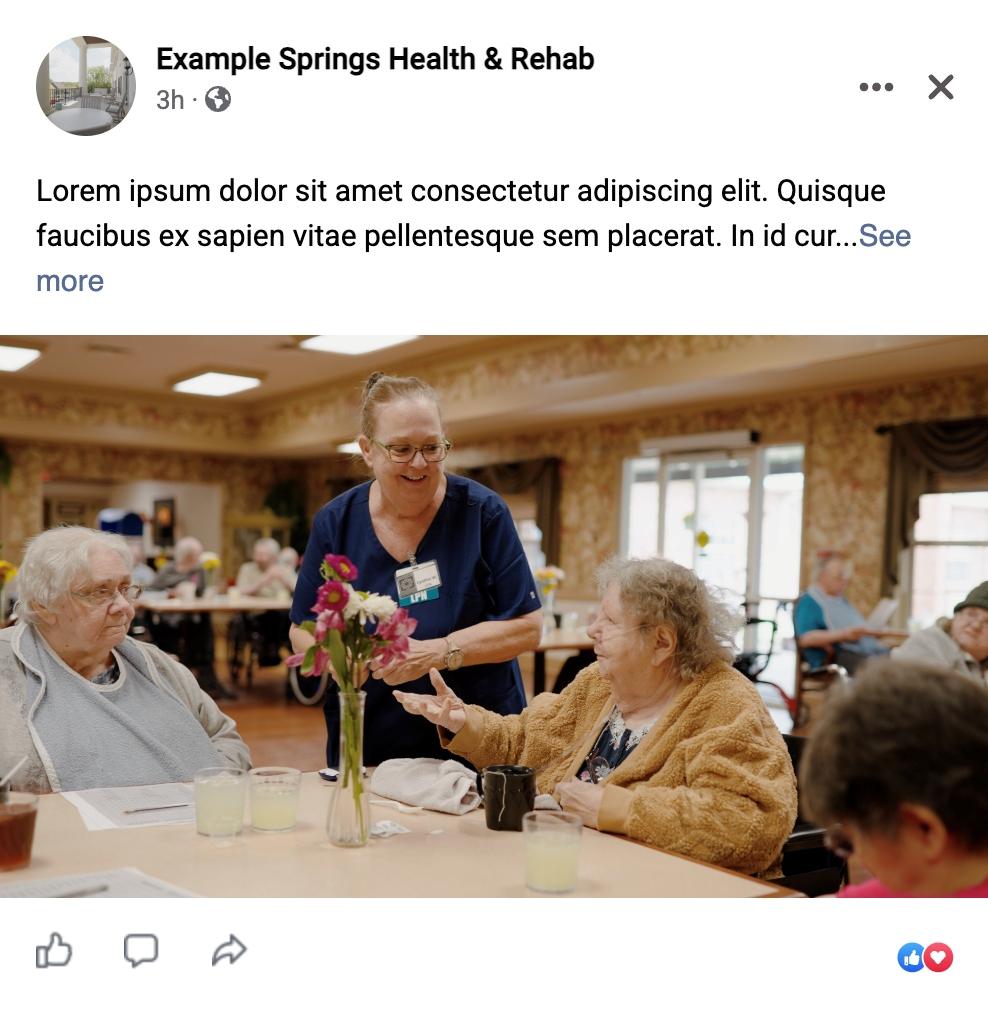
Some of the most effective social media content we’ve seen isn’t polished. It’s simple moments captured during activities, meals, or celebrations. It’s real residents, real staff, and real life.
One of our clients had a woman schedule a tour because of a single Facebook photo. She decided to move in shortly after, stating that she loved the activities she saw online and had to come see for herself. That wasn’t the result of a complex campaign, but a result of consistent, intentional storytelling.
The strategy → post consistently and with a real story to tell, in order to win hearts and minds
Strategy connects the pieces. When you have systems in place, your tactics go the extra mile. You go from spending aimless marketing dollars in hopes of solving a problem to investing in a solution that actually shows results on an operations call with your team.
When online elements like websites, ads, and social media align, digital tactics stop feeling like a scramble and start functioning like infrastructure.
You see:
For senior living, online presence isn’t about chasing attention, but supporting stable operations and better care.
At Bellwether, we focus primarily on healthcare organizations because we believe in the model of care. We care less about Facebook impressions and more about outcomes: stronger teams, steadier census, and healthier communities.
If you’re evaluating your current online presence and wondering whether it’s actually improving operations, we’re happy to take a look and share what we see.
Submit a form for a free digital audit and consult. No pitch. Just perspective.